
Most packaging conversations start with the logo. They should start with the product.
A bag that looks great on screen can still tear under a jar of pickles, sag with a pair of boots or feel cheap next to a gold necklace. The material decides all of that long before the design gets a say.
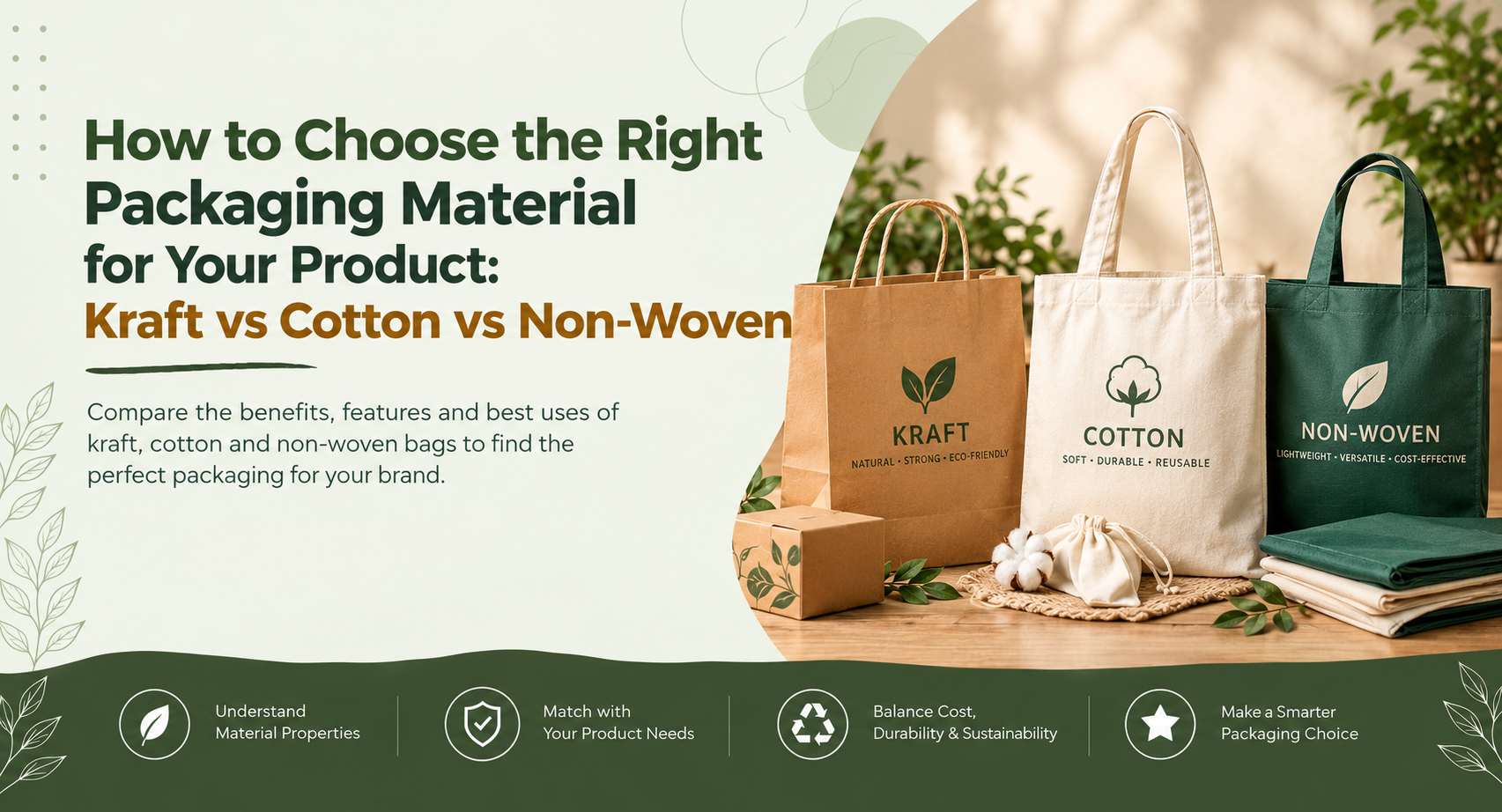
For most Indian businesses, the choice narrows down to three options: kraft paper, cotton and non-woven. Each one is genuinely good at something. None of them is good at everything.
This guide walks through how to pick between them based on what you sell, how customers use the bag and what you want your brand to say. If you want the full product range first, you can browse Bag Bee’s packaging options.
Kraft Paper: The Everyday Workhorse
Kraft paper is the brown, slightly textured stock most people picture when they think of a paper bag. It is made from wood pulp and tends to be strong for its weight.
Where it fits best. Bakeries, cafes, pharmacies, bookstores, boutiques and quick-service food outlets. It suits products that are light to medium in weight and bought on a single visit.
What it does well. Kraft prints cleanly with one or two colours and looks honest without much effort. It is widely seen as a natural, paper-based choice, which many customers now prefer over plastic.
Where it struggles. Water is its weak spot. A wet floor, a sweating cold drink or a monsoon delivery can soften the bag quickly. Very heavy or sharp-edged items may also need a higher GSM, a wider base or twisted paper handles.
A useful tip. If you sell food, ask about grease-resistant or lined options so oil does not seep through and spoil the print.
Cotton: The Long-Life Brand Carrier
Cotton bags, including canvas and calico, are woven from natural fibre. They feel soft, fold easily and can last for years when stitched well.
Where it fits best. Fashion and lifestyle labels, bookstores, organic and wellness brands, corporate gifting and event merchandise. It suits brands that want the bag to become part of the customer’s daily routine.
What it does well. Cotton is washable and highly reusable, so your logo keeps travelling long after the purchase. It takes screen printing well and has a relaxed, premium-casual feel. Explore our cotton and cloth bags if long-term visibility matters more than unit cost.
Where it struggles. Cotton usually costs more per piece than kraft or non-woven, and it is heavier to store and ship. Its environmental benefit also depends on reuse. A cotton bag that is used once and forgotten may not deliver the green image you were hoping for.
A useful tip. Give people a reason to keep it. A clean design, a useful size and a sturdy handle do more for reuse than a large logo ever will.
Non-Woven: The Practical Middle Ground
Non-woven bags are made from polypropylene fibres bonded together with heat or pressure rather than weaving. The result looks like fabric, feels sturdy and stays light.
Where it fits best. Supermarkets, garment and footwear stores, pharmacies, trade fairs, hotel amenity kits and promotional giveaways. It handles medium to heavy loads and repeat use without a big jump in cost.
What it does well. Non-woven resists moisture better than paper and usually costs less than cotton. It comes in many colours and works with screen printing and heat transfer for bold logos. You can see the range in our non-woven bags.
Where it struggles. It is still a plastic-based material, so it does not carry the same natural image as kraft or cotton. Avoid calling it biodegradable unless your supplier can certify that claim.
Kraft vs Cotton vs Non-Woven at a Glance
Here is how the three usually compare. Exact performance depends on GSM, stitching, handles and print quality, so treat this as a starting point.
| Factor | Kraft paper | Cotton | Non-woven |
| Typical load | Light to medium | Medium to heavy | Medium to heavy |
| Reuse life | Short | Long | Medium |
| Moisture resistance | Low | Medium | High |
| Relative cost per piece | Low | High | Low to medium |
| Brand impression | Natural, honest | Premium-casual, lifestyle | Practical, value-driven |
| Print options | Flexo, offset, screen | Screen, digital | Screen, heat transfer |
| Eco perception | Strong | Strong if reused | Moderate |
Also Read: Paper vs Non-Woven vs Cloth Bags: A Durability & Compliance Comparison for Indian Businesses
Which Material Suits Your Product?
If you are still unsure, start from what you sell.
Bakeries and food outlets. Kraft paper is usually the natural fit for takeaway items. For cakes and pastries that need structure, a dedicated custom cake box protects the product far better than any bag.
Fashion and apparel. Non-woven works well for high-footfall stores and festive rushes. Cotton suits labels that want a tote customers will carry for years.
Jewellery and premium gifting. Small, rigid bags with a refined finish tend to match the price point better than any of the three in their basic form. Take a look at our jewellery bags for this category.
Supermarkets and kirana stores. Non-woven handles weight and repeat trips. Kraft can work for lighter, dry items at the counter.
Hotels, events and corporate gifting. Cotton makes a strong keepsake. Non-woven is a sensible choice when you need volume on a tighter budget.
Pharmacies. Kraft for small counter purchases, non-woven for larger orders and home delivery.
Many businesses end up using two materials: one for everyday sales and one for premium or gifting moments. That mix often gives the best balance of cost and impact.
Conclusion
There is no single best packaging material. There is only the best fit for your product.
Choose kraft when you want a clean, natural look for light, everyday purchases. Choose cotton when you want a bag customers keep for years. Choose non-woven when you need strength, moisture resistance and reuse at a sensible cost.
Start with the product, the customer and the way the bag will be used. The design comes after.
Not sure which material fits your product? Bag Bee manufactures paper, cotton and non-woven bags for businesses across India. Send us your requirements with your product type and quantity, and our team will suggest the right build. Call us today.
Frequently Asked Questions
Q: Which is stronger: kraft paper or non-woven?
A: Non-woven generally handles heavier loads and wet conditions better. Kraft can be made stronger with a higher GSM, a reinforced base and twisted handles, but it stays vulnerable to moisture.
Q: Is cotton more eco-friendly than non-woven?
A: Cotton is a natural fibre, but its benefit depends heavily on how many times the bag is reused. Non-woven is plastic-based, though durable versions can also be reused many times. Reuse matters as much as the material itself.
Q: Can one business use more than one material?
A: Absolutely. Many brands use kraft or non-woven for everyday sales and cotton for gifting, loyalty rewards or premium purchases.