The notices are going out. The inspections are happening. And the fines are real.
India’s ban on single-use plastics isn’t new … but 2026 is the year enforcement is no longer selective. If you’re a retailer, bakery, or food brand still using banned plastic packaging, the question is no longer if you’ll face scrutiny. It’s when.
Here’s what you need to know … and what you need to switch to before it costs you.
What the Plastic Ban Actually Covers
The 2026 enforcement push targets items that were banned under India’s Plastic Waste Management Rules but continued circulating due to inconsistent on-ground action.
The items most relevant to retailers and bakeries:
- Plastic carry bags under 75 microns
- Plastic packaging for food items … wraps, covers, sachets
- Plastic-coated paper and board items used for food packaging
- Single-use plastic cutlery, stirrers, and trays
- Thermocol (EPS) items used for packaging
If any of these are currently part of your in-store, bakery, or dispatch packaging … you are in scope.
What Is EPR and Why It Now Applies to You
Extended Producer Responsibility (EPR) means that brands, importers, and producers who use plastic packaging are now responsible for ensuring that packaging is collected and recycled after use.
Under the updated rules, businesses that use plastic packaging above defined thresholds must:
| Obligation | Who It Applies To |
| Register on the CPCB EPR portal | All producers, importers, brand owners using plastic packaging |
| Set annual EPR targets | Based on plastic packaging volume used |
| Purchase EPR certificates | From registered recyclers to offset targets |
| File annual returns | Through the centralised portal |
| Maintain packaging records | Available for inspection at any time |
Small retailers and bakeries often assume EPR doesn’t apply to them. It does … if you are a brand owner or if you source packaging under your own label.
The Fine Structure: What Non-Compliance Actually Costs
This is where most businesses underestimate the risk.
- Fines for using banned plastic items: up to ₹1 lakh per instance under Environment Protection Act provisions
- Repeat offences: escalating penalties and potential closure notices
- EPR non-compliance: financial penalties plus blacklisting from CPCB registration
- Inspections can be triggered by complaints, routine checks, or media attention
For bakeries and retailers operating on thin margins, a single inspection and notice can be more damaging than the cost of switching packaging entirely.
What Compliant Packaging Looks Like for Retailers & Bakeries
The good news: compliant options exist for every use case.
| Old Packaging | Compliant Alternative | Best For |
| Plastic carry bags | Non-woven bags / paper bags | General retail, grocery |
| Plastic food wraps | Kraft paper wraps, greaseproof paper | Bakeries, deli counters |
| Thermocol trays | Bagasse or kraft board trays | Food packaging |
| Plastic gift bags | Cotton tote bags / paper bags with print | Retail gifting |
| Plastic-coated mailers | Kraft mailers, paper bubble mailers | D2C shipping |
| Clear plastic bags | Compostable bags (certified) | Fresh produce, bakery |
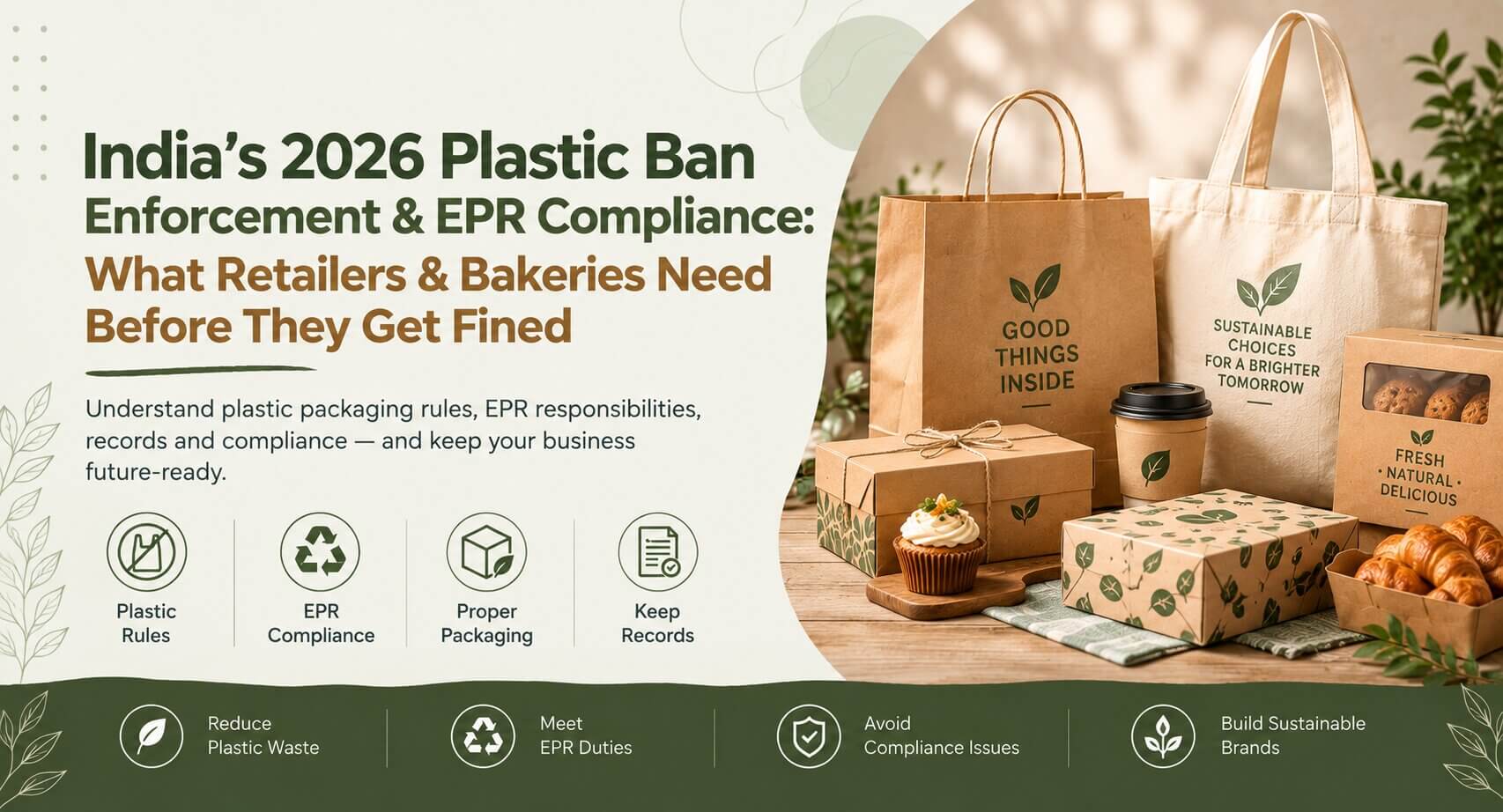
The switch doesn’t have to compromise presentation. Custom-printed kraft, cotton, and non-woven packaging can carry your branding as cleanly as any plastic alternative … often better.
What Retailers Need to Do Right Now
Three things. In this order.
- Audit your current packaging
List every packaging item you use … carry bags, food wraps, boxes, mailers, in-store items. Identify which are plastic and whether they fall under banned categories. - Check your EPR obligation
If you use branded packaging or source packaging under your own label, check whether you need to register on the CPCB EPR portal. When in doubt, consult a compliance advisor. - Switch packaging before the next inspection cycle
Don’t wait for a notice. Transitioning takes time … especially if you want custom-printed options. Lead times for compliant branded packaging run 2 to 4 weeks minimum.
Why Bakeries Have a Specific Challenge
Bakeries sit at the intersection of two pressures: food safety requirements and packaging compliance. Plastic-coated boards and wraps have been standard in bakeries for decades because they’re grease-resistant and hygienic.
Compliant alternatives now exist that meet both requirements:
- Greaseproof kraft paper … food-safe, printable, biodegradable
- Bagasse-based boxes … compostable, heat-resistant, suitable for baked goods
- Compostable clear bags … for displaying products while meeting compliance
- Custom-printed paper bags … for carry-out and retail packaging
Switching takes planning … but it’s entirely achievable and increasingly expected by customers who are paying attention.
Also Read: Custom Cake Boxes for Bakeries: A Buyer’s Guide
Don’t Wait for the Fine — Contact Now!
Enforcement is tightening. Inspection cycles are increasing. And the brands that have already switched are not worrying about any of this.
If your packaging isn’t compliant yet, now is the right time to fix it … before a notice forces your hand at the worst possible moment.
Frequently Asked Questions
Q: Does the plastic ban apply to small retailers and bakeries or only large brands?
A: The ban applies to the use of banned plastic items by any business … size is not an exemption criterion, though EPR registration thresholds vary by packaging volume.
Q: What is the deadline for EPR compliance in India for 2026?
A: EPR obligations are ongoing … registration, annual targets, and certificate filing are required each year, with 2026 enforcement significantly more active than previous cycles.
Q: Where can I source compliant branded packaging for my retail store or bakery?
A: Bag Bee supplies custom-printed paper bags, non-woven bags, and more for retailers and bakeries across India — with branding options available on all materials.