A customer pays, picks up the bag and walks out of your store. The sale is closed.
Your marketing is not.
That bag is about to ride the metro, sit beside an office desk and get reused for vegetables next weekend. Each of those moments puts your logo in front of people who have never stepped into your shop.
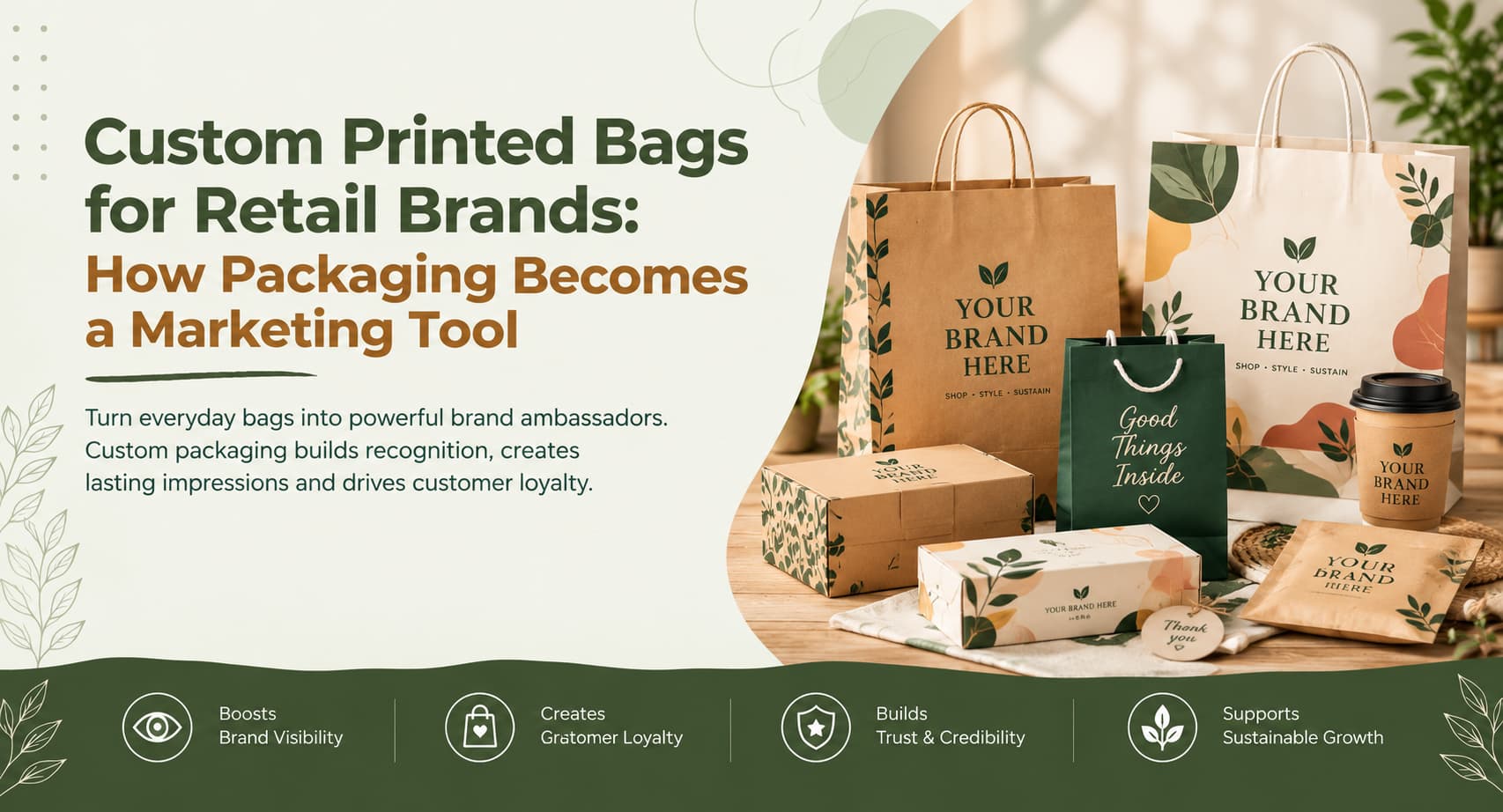
This is why custom printed bags for retail brands deserve more attention than a line on the packaging invoice. Chosen with care, a carry bag becomes one of the most underrated advertising assets a store owns.
Below, we look at how that happens, which materials and print methods suit different retail categories, and the small mistakes that quietly waste the opportunity.
Why a Printed Bag Works as a Marketing Channel
Most advertising fights for attention. A shopping bag simply shows up.
It travels through markets, malls, offices and residential lanes on the arm of a real customer. That makes it a walking billboard with a built-in endorsement: someone chose to buy from you and is now carrying the proof.
The reach outlives the purchase. A sturdy bag rarely goes straight into the bin. People reuse good bags for lunch, groceries, gym kit and gifting. Every reuse is another round of exposure you did not pay for separately.
It reaches the right neighbourhoods. Your customers tend to live, work and shop near people who look a lot like them. A bag carried through those spaces quietly targets an audience that already fits your store.
It is owned media. Paid ads stop the moment the budget runs out. A printed bag keeps working for as long as it survives. Once the order is paid for, there is no ongoing spend tied to each view.
None of this means a bag replaces digital marketing. It works best as the physical layer of a brand that customers already see online and in store.
Choosing the Right Bag Material for Your Retail Category
The material decides how the bag feels, how long it lasts and which print methods it can take. Start here before you think about artwork.
| Material | Typically suits | Look and feel | Watch out for |
| Kraft paper | Bakeries, cafes, pharmacies, everyday retail | Natural, earthy, eco-leaning | Weakens when wet; limited colour vibrancy |
| White or art paper (laminated) | Fashion, jewellery, cosmetics, gifting | Premium, glossy or matte | Lamination can affect recyclability |
| Non-woven fabric | Supermarkets, apparel, events, pharmacies | Durable, reusable, budget-friendly | Plastic-based; check GSM compliance |
| Jute | Ethnic wear, handicrafts, organic stores | Rustic, textured, sturdy | Fine detail prints poorly on the weave |
| Cotton or canvas | Lifestyle brands, bookstores, premium merch | Soft, long-lasting, highly reusable | Higher unit cost; heavier to ship |
Match the bag to the product. A saree store needs a wide, flat format. A footwear brand needs depth and strong handles. A jeweller may want a small, rigid bag with a premium finish.
Think about weight. If customers carry heavy items, ask your supplier about paper GSM, gusset width and handle type before you fall for a design.
Consider your positioning. A minimalist kraft bag can signal a natural, honest brand. A laminated white bag with foil can signal luxury. Neither is better. They simply say different things.
Printing Methods and Finishes, Explained Simply
The same logo can look sharp or muddy depending on how it is printed. Here is how the common methods usually compare.
| Method | Generally best for | Strength | Limitation |
| Screen printing | Non-woven, jute, cotton | Bold, solid colours that last | Each colour adds a screen; not ideal for photos |
| Offset printing | Laminated paper bags | Crisp full-colour artwork and gradients | Better suited to larger runs |
| Flexographic printing | High-volume kraft and paper bags | Efficient for big, repeat orders | Simpler designs work best |
| Digital printing | Short runs, trials, seasonal designs | Full colour with low setup | Unit cost can rise at volume |
| Heat transfer | Non-woven and fabric bags | Multi-colour logos on textured surfaces | Durability depends on application quality |
Design Principles That Turn a Bag Into an Ad
A bag is viewed for seconds, often from across a street. Design for that reality, not for a close-up on your laptop.
- Go bigger on the logo – A small logo tucked in a corner may look elegant in a mock-up and vanish in real life. Make sure it reads from a distance.
- Print both sides – Bags swing, flip and get set down facing either way. A blank back panel is wasted space.
- Keep the palette tight – Two or three brand colours usually read better than a busy full-colour design. Fewer colours can also keep screen-printing setup simpler.
- Give people a next step – A website, an Instagram handle or a QR code linking to your store or a current offer turns passive exposure into something measurable.
- Use the gussets and handles – A tagline on the side panel or handles that match your brand colour make the bag feel finished.
- Make it worth keeping – A clean pattern, a witty line or a festive edition gives people a reason to reuse the bag. Reuse is where most of the extra visibility comes from.
Also Read: Custom-Branded Eco Packaging for Diwali & Wedding Season
Common Mistakes Retail Brands Make With Custom Bags
Most bag projects go wrong in small, avoidable ways.
Buying on unit price alone
The cheapest bag that tears on the way home does more harm than having no branded bag at all. Your logo is on the failure.
Picking a size that fits nothing
One generic size forces customers to fold products or carry two bags. A few well-planned sizes usually serve a store better.
Skipping the physical sample
A digital proof shows layout. Only a sample shows real colour, handle strength and how the print sits on the material.
Letting colours drift between orders
Without fixed Pantone references, the second batch can look noticeably different from the first. Inconsistent colour weakens recognition.
Forgetting online orders
Many brands invest in store bags and ship e-commerce orders in plain courier pouches. That is a missed first impression.
Ordering too late
Festive peaks like Durga Puja, Diwali and the wedding season put pressure on production schedules everywhere. Running out of bags in your busiest week is an expensive kind of mistake.
Conclusion
A carry bag is not just a container for a purchase. It is a moving piece of your brand that keeps working long after the billing counter.
Get the material right for your products. Pick a print method that suits that material. Keep the design bold, simple and worth reusing.
Do that, and custom printed bags stop being a packaging cost and start earning their place in your marketing plan.
Planning your next packaging order? Bag Bee helps retail brands across India source custom printed bags in the material, size and finish that fits their store. Share your quantity and artwork, and our team will help you choose the right build. Call us today to get started.
Also Read: India’s 2026 Plastic Ban Enforcement & EPR Compliance
Frequently Asked Questions
Q: What is the minimum order quantity for custom printed bags?
A: It depends on the material and print method. Digital printing generally allows smaller runs, while offset and flexo tend to make sense at higher volumes. Ask your supplier for the MOQ on your specific bag before finalising artwork.
Q: Which type of bag is best for a clothing store?
A: Laminated paper bags suit premium fashion. Non-woven bags work well for value and high-footfall stores. Cotton or canvas bags can suit lifestyle brands that want customers to reuse them for years.
Q: Can paper bags carry heavy products?
A: They can, if the paper GSM, gusset and handles are chosen for the load. Share the product weight with your supplier so they can recommend a suitable build.